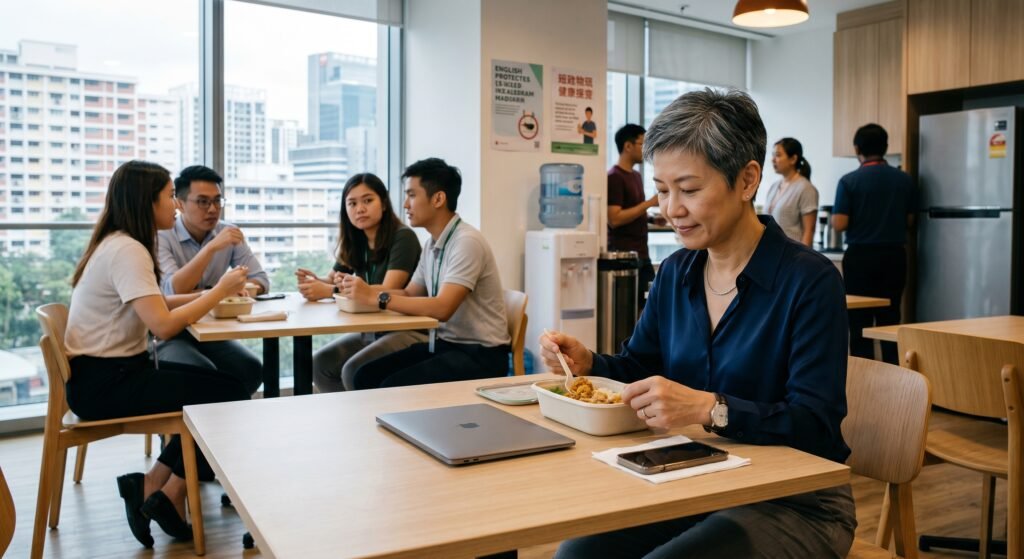
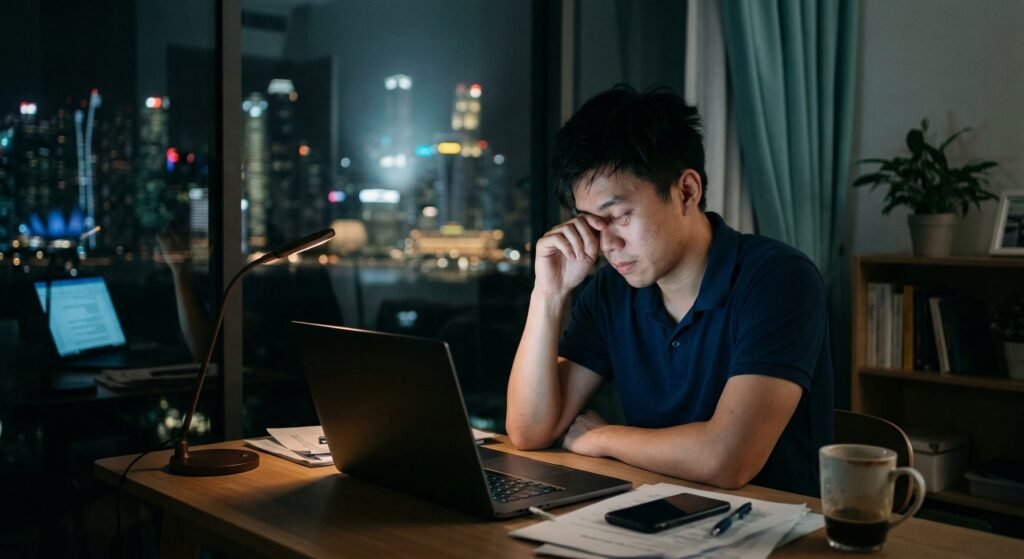
Here’s a question most employees don’t get asked at work: How did you sleep last night?
It might seem personal. But the answer has a direct impact on how someone thinks, collaborates, makes decisions, and manages stress throughout the day. And in Singapore — one of the most sleep-deprived nations globally — it’s a question worth taking seriously.
A 2024 health and lifestyle survey found that Singaporeans sleep an average of just 6.5 hours per night, well below the recommended 7 to 9 hours. Among working adults, nearly 40% reported that poor sleep regularly affects their ability to concentrate and perform at work.
Sleep isn’t a soft topic. It’s one of the most foundational well-being factors there is — and it’s quietly undermining workplace performance across the country.
How Poor Sleep Shows Up at Work
You don’t need to be falling asleep at your desk for sleep deprivation to affect your work. The signs are often more subtle:
- Slower thinking and poorer judgement — decisions that would normally take minutes start to feel foggy and uncertain
- Shorter patience and lower emotional regulation — small frustrations feel bigger, and interactions become harder to navigate calmly
- Reduced creativity and problem-solving — the brain needs rest to make the connections that drive innovation
- Increased errors — from minor oversights to more significant mistakes, sleep deprivation raises the risk across the board
- Lower resilience to stress — everything feels harder when you’re running on empty
Over time, chronic sleep loss compounds. It doesn’t just affect one bad day — it reshapes how someone experiences work week after week.
Why Singapore Sleeps So Little
Several factors contribute to Singapore’s sleep challenge:
Long working hours and commutes — by the time many employees get home, unwind, handle personal responsibilities, and finally get to bed, there simply aren’t enough hours left for proper rest.
Screen culture — late-night scrolling, streaming, and work emails extend the waking day well past what the body needs. Blue light from devices further disrupts the body’s natural sleep signals.
The hustle mindset — sleeping less is sometimes worn as a badge of honour. The idea that successful people sleep less is persistent, even though research consistently shows the opposite.
Stress and anxiety — many employees lie awake processing the day’s worries or anticipating tomorrow’s challenges. The mind stays active long after the body wants to rest.
What Organisations Can Do
Sleep might feel like a personal matter, but organisations influence it more than they think:
- Respect boundaries around after-hours communication — late-night emails and messages directly interfere with wind-down routines and sleep quality
- Avoid glorifying overwork — when “I only slept four hours” is met with admiration instead of concern, it reinforces unhealthy norms
- Consider flexible start times — not everyone is at their best at 8am. Even small adjustments can help employees align their schedules with their natural sleep patterns
- Include sleep in well-being conversations — workshops, resources, and check-ins that treat sleep as a core well-being pillar (not an afterthought) help normalise the topic
- Design workloads that allow recovery — sustainable performance requires sustainable rest. If employees consistently can’t switch off, the workload may need recalibrating
These aren’t dramatic changes. But they signal that rest is valued — not just tolerated.
How Peers and Well-Being Champions Can Help
Sleep is one of those topics that’s easy to bond over — almost everyone has experienced a rough night. As a peer or well-being champion, you can:
- Normalise talking about sleep — “I’ve been sleeping terribly this week” is a more common experience than most people admit
- Share what helps you — whether it’s a screen curfew, a wind-down routine, or simply going to bed earlier, practical tips from colleagues feel more relatable than expert advice
- Notice when a teammate seems consistently tired or flat — a gentle “You seem a bit run down — everything okay?” opens a door without overstepping
Well-being champions don’t need to become sleep experts. But simply making sleep a visible, supported part of the well-being conversation can shift how seriously people take their own rest.
The Bigger Picture
Sleep is the foundation that everything else rests on — focus, mood, resilience, relationships, and long-term health. When employees are well-rested, they think more clearly, collaborate more generously, and cope with pressure more effectively.
Organisations that treat sleep as a strategic well-being priority — not a personal indulgence — are investing in the kind of sustainable performance that benefits everyone.
Because the most productive thing an employee can sometimes do is get a good night’s rest.