Well-Being Champions Network

I AM A LEADER

Well-being doesn't cascade on its own.
It starts with you.

The WCN gives leaders the tools to build well-being into how their organisation works.

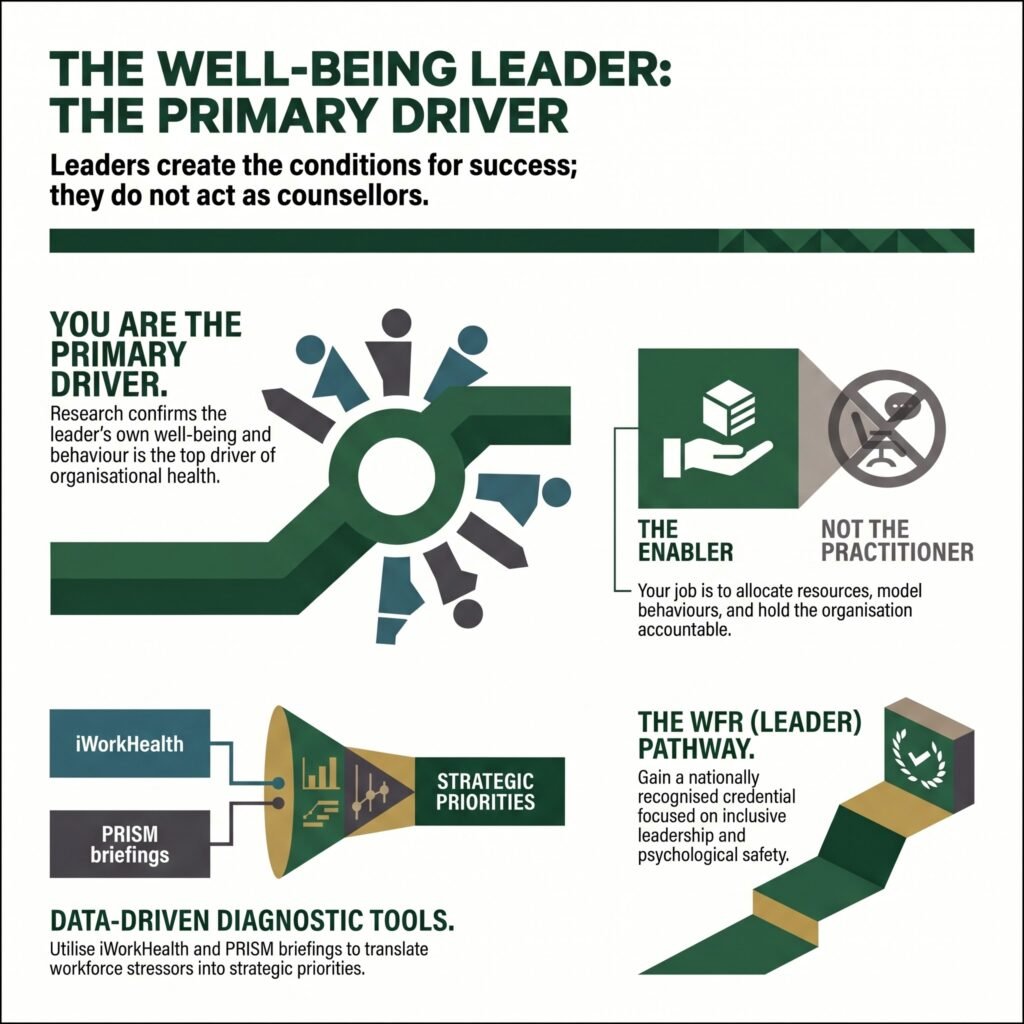
Research on Singapore workplaces is unambiguous: among every factor studied, the leader’s own well-being and behaviour is the single most influential driver of organisational well-being. Not the EAP. Not the training programme. Not the policy.

The WCN is not asking you to become a counsellor. It is asking you to create the conditions where your people can thrive – and giving you the tools to do it credibly, efficiently, and with evidence behind every decision.

What Leaders Actually Do in the WCN
Gemini_Generated_Image_ol12cool12cool12

Most well-being programmes ask leaders to attend a workshop and send a memo. That is not what this is.

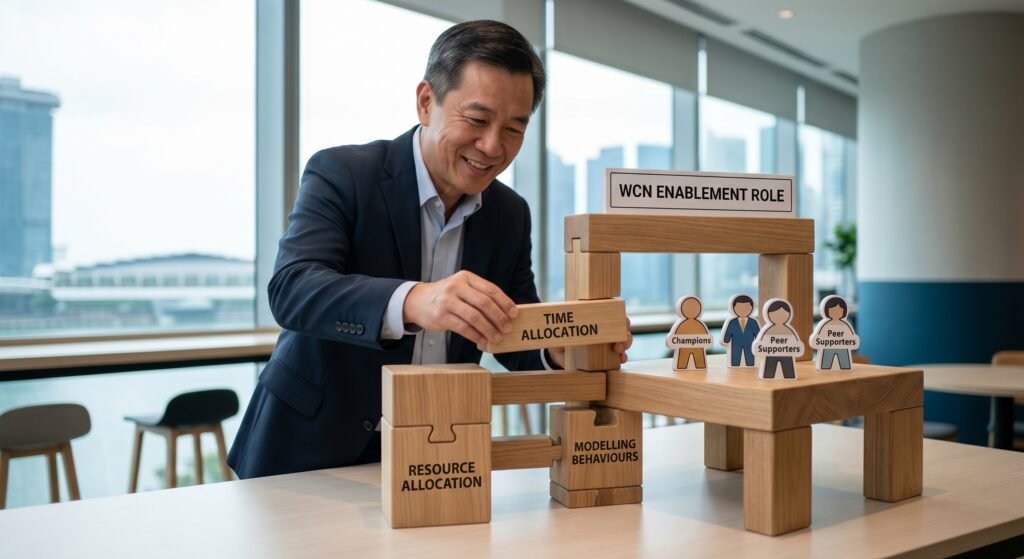
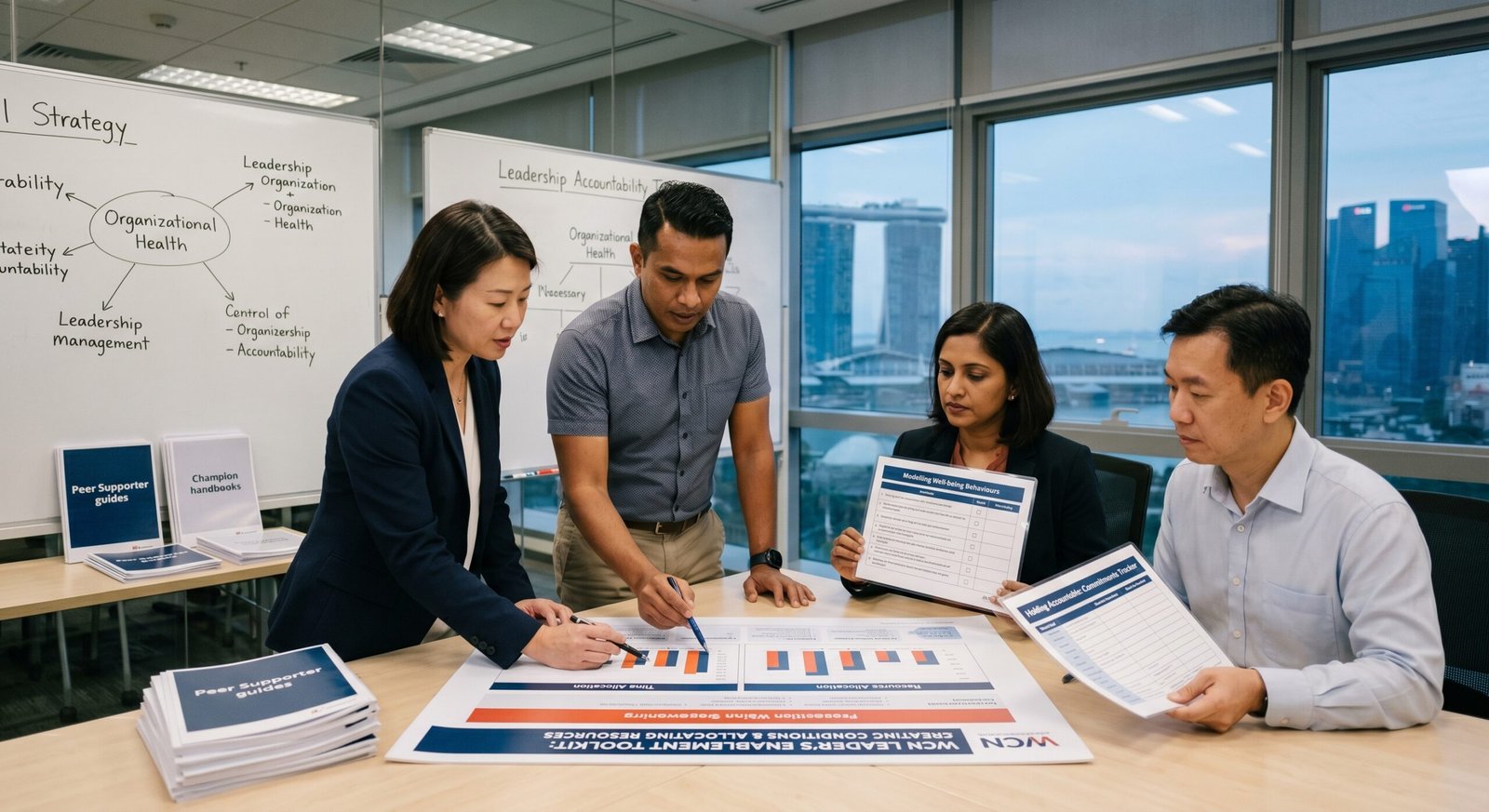
Your role in the WCN is the enabling function. You do not run the programme – your Champions do that. You do not deliver peer support – your Peer Supporters do that. What you do is create the conditions that make everything else possible: allocating time and resources, modelling the behaviours you want to see, and holding the organisation accountable to what it has committed to.

That is a specific job. The WCN gives you specific tools for it.

iWorkHealth and PRISM

Before you can lead on well-being, you need to understand what is actually happening in your organisation. iWorkHealth is a free, government-developed assessment tool that identifies the specific stressors affecting your workforce across nine dimensions – from job demands and management support to organisational culture and workplace harassment. PRISM (Psychosocial Risk & Intervention Strategy Model) is a seven-dimension diagnostic aligned to ISO 45003, the international standard for psychological health and safety at work.

Culture Activation

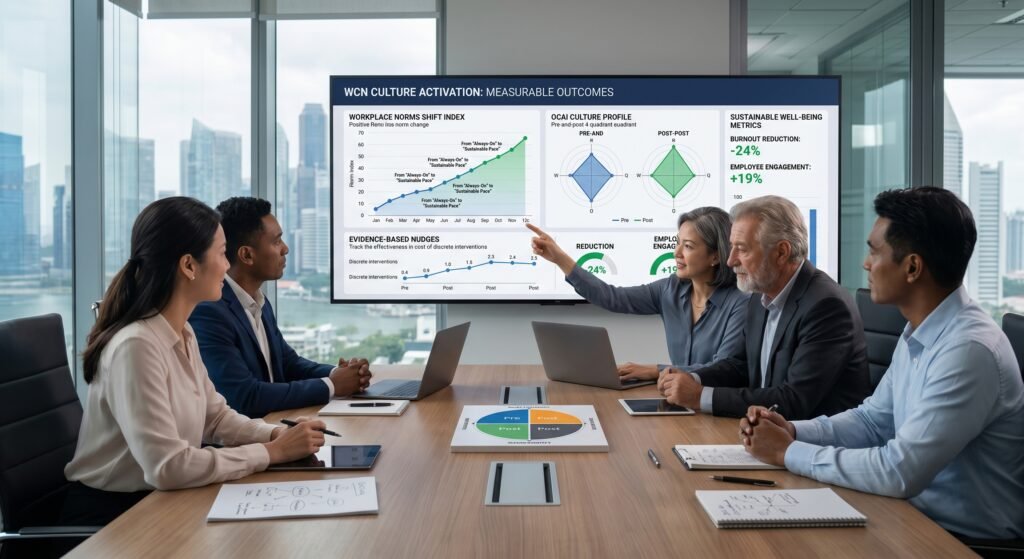
Sustainable well-being is a culture question, not a training question. WCN’s Culture Activation programming works with leadership teams to identify the specific behavioural and structural changes needed to shift workplace norms – using the Organisational Culture Assessment Instrument (OCAI) and evidence-based nudge design.

This is not a keynote. It is a structured process that produces measurable outcomes.

Events and Peer Exchange

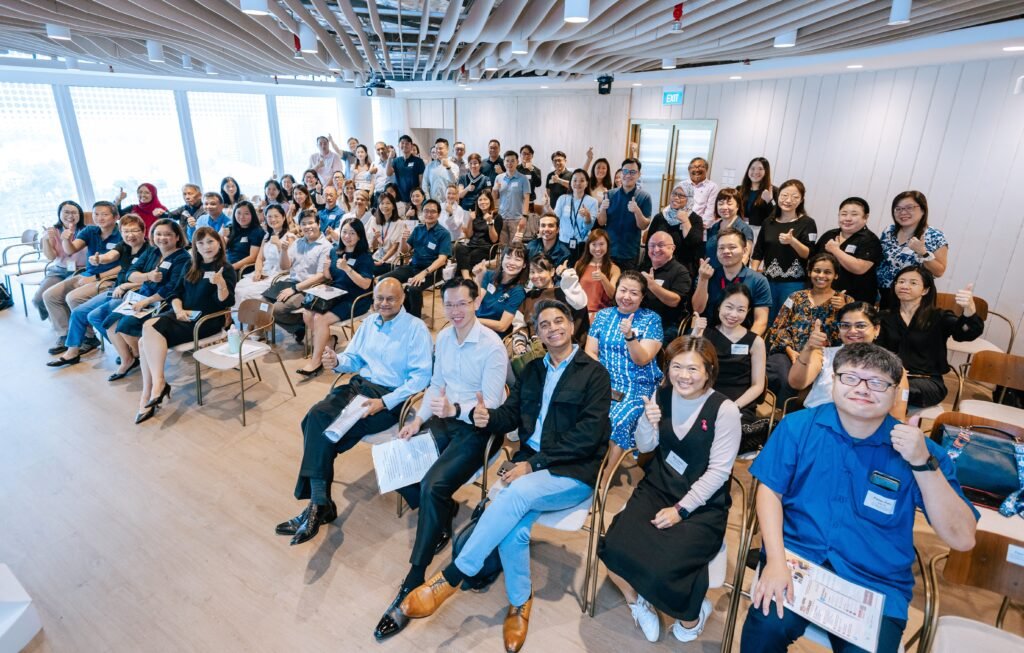
WCN’s engagement events bring together leaders, practitioners, and national partners for substantive dialogue on workplace well-being. Past events have featured senior leaders from organisations including Singtel, Deutsche Bank, Airbus Asia Pacific, and C&W Services, alongside government representatives from the Ministry of Manpower (MOM), and the Workplace Safety and Health Council (WSHC). Leaders participate as keynote speakers, panelists, and co-creators of national practice – not just attendees.

Well-being is not a cost centre. Psychosocial risk is a regulatory and reputational exposure that is growing – not shrinking. Singapore’s Tripartite Advisory on Mental Health and Well-being sets clear expectations for employers. ISO 45003 alignment is increasingly relevant for Environmental, Social and Governance (ESG) reporting. And the evidence on the relationship between psychological safety and performance, retention, and absenteeism is settled.

The WCN gives you a defensible, evidence-based approach to all of this – at a fraction of the cost of building it in-house.

Becoming a Certified Well-being First Responder

The Well-being First Responder (WFR) programme is the WCN’s flagship training pathway, giving employees a nationally recognised credential in workplace peer support.

The programme is structured around roles. Everyone starts with the same Foundation: self-care for sustainable well-being, foundational Psychological First Aid (PFA), and psychological safety at work. From there, each role follows a track tailored to their specific function.


Your track: Certified WFR (Leader)

The Leader track adds three mandatory modules to the Foundation: Supportive Conversations for Leaders, and Inclusive Leadership for Psychological Safety at Work. You then choose one elective from options including Emotional Regulation and Mental Agility, Mind-Body Practices, and Governing Digital and AI-enabled Work for Sustainable Performance, plus one Mental Health Literacy elective.

The Leader track is lighter on hands-on support skills by design. Leaders do not need to be practitioners. They need to be informed enough to create the conditions where practitioners can do their work well.