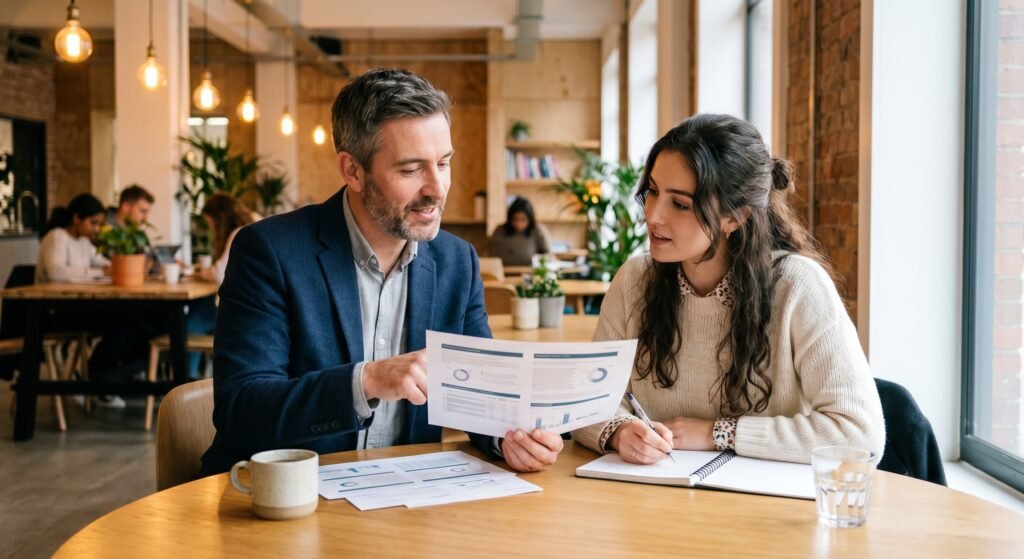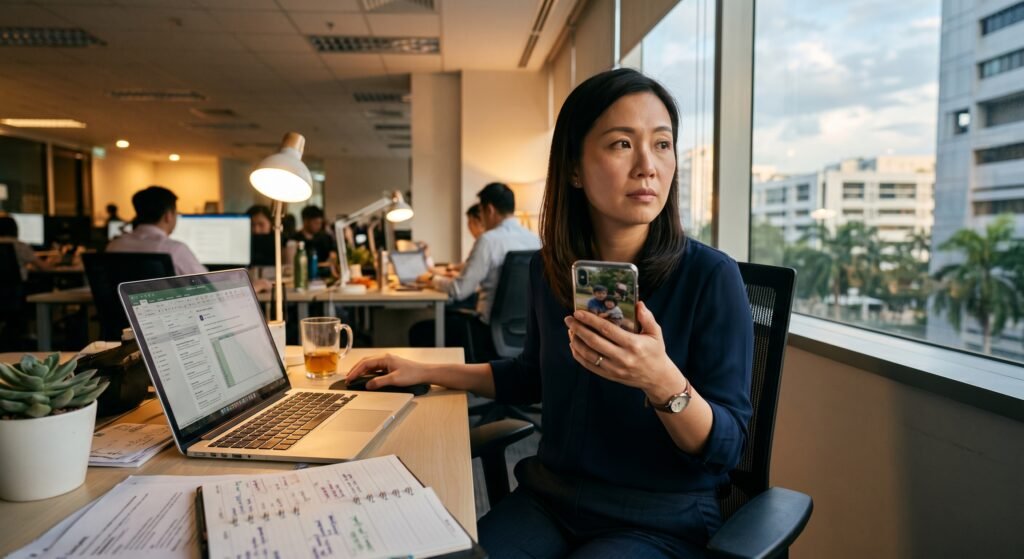
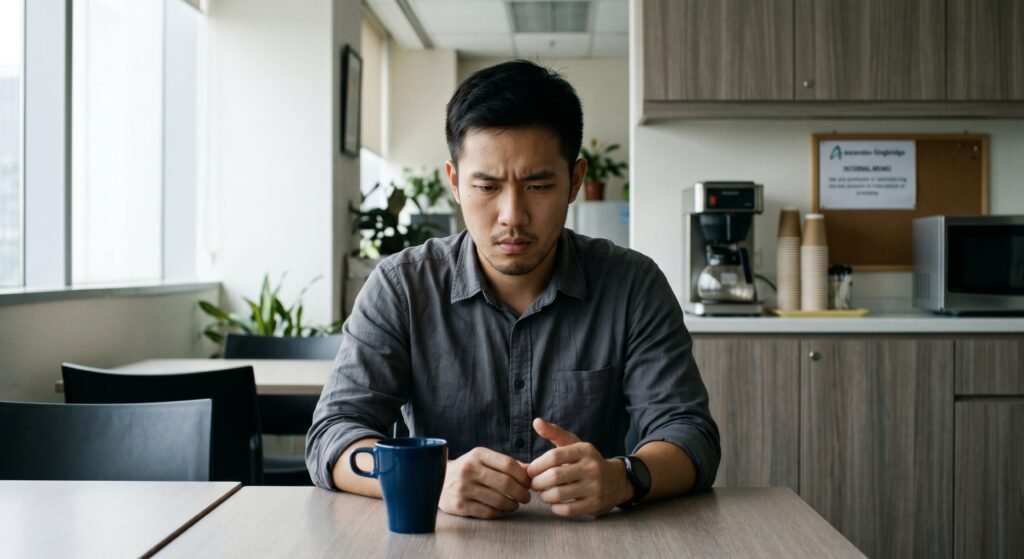
Anxiety is the most common mental health experience in Singapore — and one of the least acknowledged in professional environments. It is frequently mistaken for ambition, thoroughness, or drive. It can look, from the outside, like high performance. From the inside, it feels like a system running perpetually on alert.
What Workplace Anxiety Actually Looks Like
Workplace anxiety is not always visible panic. More often it presents as: the professional who over-prepares for every meeting because the prospect of being caught without an answer is unbearable. The manager who cannot delegate because the loss of control feels intolerable. The high performer who lies awake at 3am rehearsing the next day. The person who checks email compulsively on weekends because not checking feels worse than checking.
These patterns are common enough in Singapore’s professional culture to be treated as normal — even as markers of dedication. They are not. They are symptoms of an anxiety response that has become chronic and is being treated as a personality trait rather than a condition worth addressing.
Singapore’s Particular Anxiety Landscape
Several features of Singapore’s cultural and professional environment create specific anxiety risks. Academic and career pressure from an early age establishes performance-linked self-worth that persists into adulthood. A competitive job market and high cost of living maintain financial anxiety as a background frequency. Cultural norms that equate expressing struggle with burdening others mean that anxiety goes unvoiced and untreated for years.
The Institute of Mental Health’s National Study on Mental Health found anxiety disorders to be the most prevalent mental health conditions in Singapore. The majority of those affected do not seek treatment. Most manage privately, in workplaces that neither know nor ask.
What Helps — and What Doesn’t
Telling someone with chronic anxiety to ‘just relax’ or ‘stop overthinking’ is about as useful as telling someone with a broken leg to ‘just walk it off.’ The nervous system that produces anxiety is not being unreasonable — it is responding according to its own logic, shaped by experience and physiology.
What actually helps: learning to recognise and regulate physiological arousal before it escalates; developing the capacity to observe anxious thoughts without being controlled by them; building a daily recovery practice that maintains baseline regulation; and, in many cases, working with a mental health professional who can provide structured support.
For organisations, the most important thing is creating an environment where anxiety can be named. Not fixed — just acknowledged. The stigma around mental health in Singapore workplaces still prevents many people from saying simply: ‘I’m finding this hard, and I could use some support.’ Reducing that stigma begins with leaders who model the honesty they want to see.
Our Mind-Body Practices for Self-Regulation course provides practical, evidence-based tools for managing the physiological reality of anxiety — not just understanding it, but working with it in real time. Mind-Body Practices for Self-Regulation.