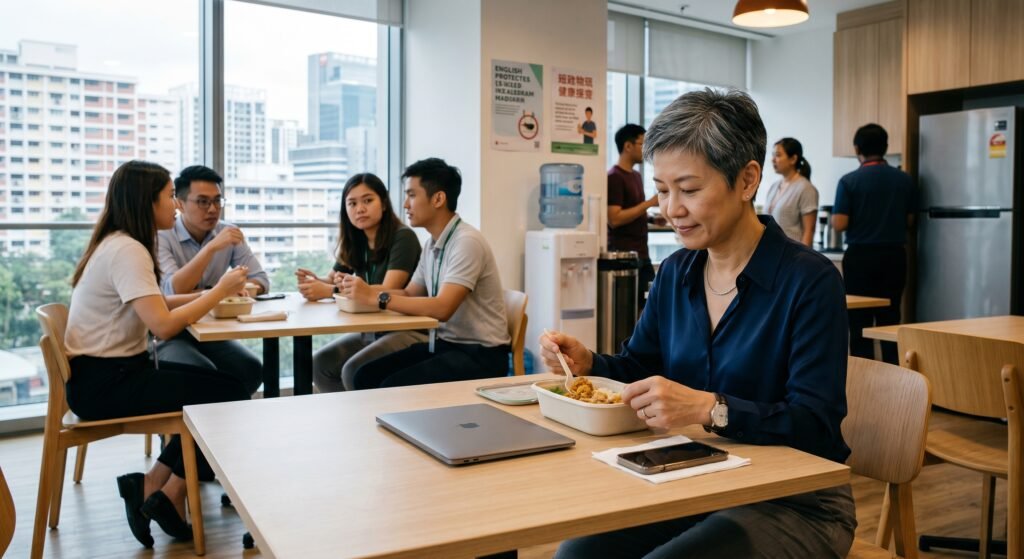

Imagine starting your day helping an elderly parent with a medical appointment, rushing to the office for back-to-back meetings, and ending it helping your child with homework — all while quietly wondering if you’re doing any of it well enough.
For a growing number of employees in Singapore, this isn’t a hypothetical. It’s Tuesday.
The sandwich generation — working adults caring for ageing parents while raising children — is one of the fastest-growing demographic groups in Singapore’s workforce. A 2024 National Population and Talent Division report highlighted that more than 1 in 4 working adults in Singapore provide some form of eldercare, many alongside childcare responsibilities.
The mental load is enormous. And most of it stays invisible at work.
Why This Is a Workplace Well-Being Issue
Caregiving stress doesn’t stay at home. It follows employees into the office and shapes how they experience their working day. Common effects include:
- Constant mental juggling — managing appointments, medication, school schedules, and work deadlines simultaneously
- Guilt in every direction — feeling like you’re never doing enough for your parents, your children, or your team
- Physical and emotional exhaustion that builds over months and years, not just weeks
- Reluctance to speak up, especially in workplaces where personal responsibilities are seen as private matters
Many sandwich generation employees don’t identify as “carers.” They see it as just what family does. That makes it even harder to ask for support.
What Makes It Harder in Singapore’s Context
Singapore’s strong family values mean that many employees feel a deep cultural obligation to provide care personally rather than outsource it. While this reflects something admirable, it also means the emotional weight often falls on one or two family members — and asking for help at work can feel like admitting you can’t cope.
Add to this the rising cost of living, longer working hours, and limited affordable eldercare options, and many employees find themselves stretched to a point where something has to give. Too often, it’s their own well-being.
What Organisations Can Do (Without Overcomplicating It)
Supporting sandwich generation employees doesn’t require a complete policy overhaul. Small, thoughtful adjustments can go a long way:
- Normalise flexible arrangements — even small shifts in start times or the option to work from home on caregiving days can relieve enormous pressure
- Train managers to have supportive conversations — many employees won’t raise caregiving challenges unless they feel it’s safe to do so
- Offer practical resources — curated information on eldercare services, caregiver support networks, or employee assistance programmes
- Check in without prying — a simple “How are you managing things at the moment?” can open a door without overstepping
The goal isn’t to solve employees’ caregiving challenges for them. It’s to make sure work doesn’t make everything harder.
How Peers Can Help
Colleagues and well-being champions can make a real difference here — often more than formal policies can. If you know someone on your team is juggling caregiving responsibilities, consider:
- Offering to cover a meeting when they need to step out for an appointment
- Simply acknowledging that what they’re doing is hard — without trying to fix it
- Sharing your own experiences if you’ve been in a similar situation — it reduces the loneliness of caregiving
Sometimes the most supportive thing a workplace can offer is the feeling that someone notices.
The Bigger Picture
Singapore’s ageing population means the sandwich generation will only grow. Organisations that recognise caregiving as a workplace well-being issue — not just a personal one — will be better placed to retain experienced talent, reduce hidden burnout, and build cultures where employees can bring their whole selves to work.
Because nobody should have to choose between being a good employee and being a good family member.