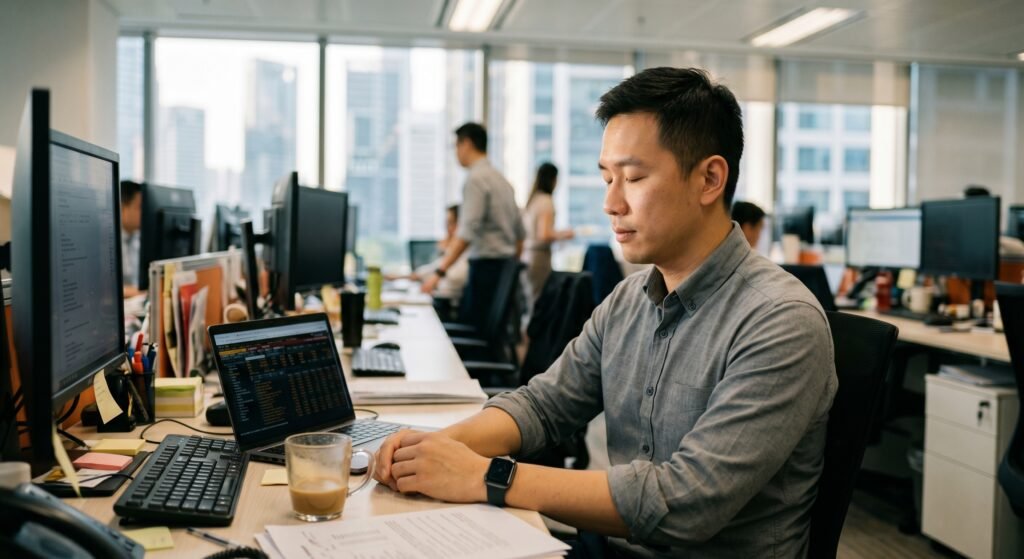
Singapore spends more on healthcare than most of its regional neighbours, and ranks highly on most health outcome measures. And yet, by most indicators, the average Singapore professional is not physically well in the ways that most matter for sustained performance and wellbeing.
Sedentary working hours. Chronic sleep deprivation. High-stress diets heavy in refined carbohydrates and sodium. Physical activity that is inconsistent at best and absent at worst. These are not personal failures — they are the predictable outputs of a working culture that has placed productivity above the physical conditions that make productivity possible.
The Performance Cost of Physical Neglect
The research connecting physical health to cognitive performance is extensive and consistent. Sleep deprivation at the level most Singapore professionals routinely experience — six hours or fewer — produces measurable impairments in attention, decision quality, emotional regulation, and creative thinking. These impairments are not dramatically visible; they are subtle enough to be dismissed and significant enough to matter.
Physical inactivity, similarly, is not just a long-term health risk. It is an immediate cognitive and mood regulator. Exercise increases brain-derived neurotrophic factor (BDNF), sometimes described as fertiliser for the brain — supporting neuroplasticity, memory consolidation, and mood regulation through mechanisms that no amount of caffeine can replicate.
Movement in the Singapore Context
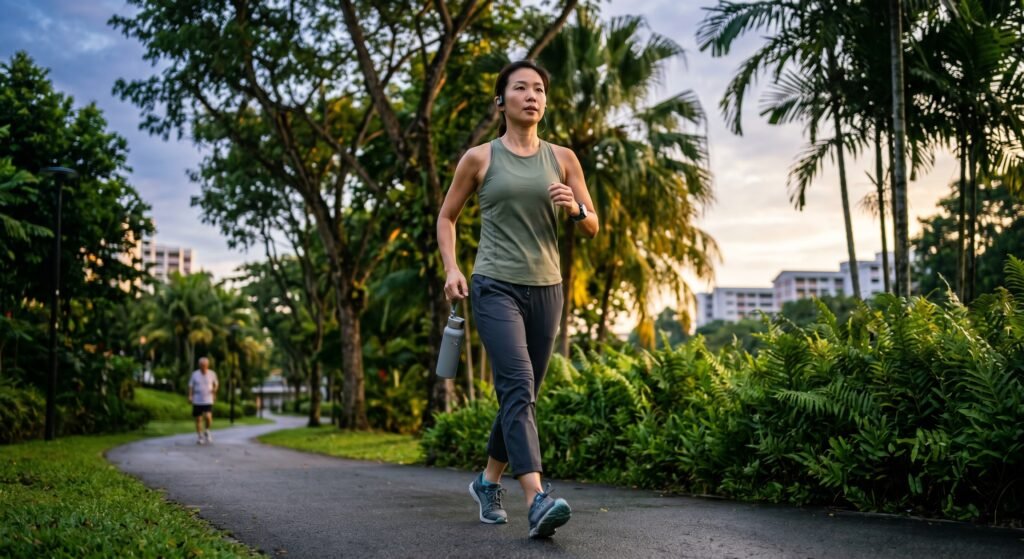
Singapore’s climate creates genuine barriers to outdoor physical activity during peak working hours — and genuine opportunities before 8am and after 6pm when the heat subsides. The extensive park connector network, the accessible public swimming pools, the community centre gyms and fitness corners: Singapore is actually well-resourced for physical activity. The barrier is usually time and priority, not infrastructure.
The research on minimum effective dose offers a useful reframe: you do not need to become an athlete to access most of the health and performance benefits of physical activity. The gains from moving from nothing to a little — fifteen to twenty minutes of moderate activity, most days — are the largest available. The marginal gains from going further are real but smaller.
The Organisational Role
Organisations that support employee physical wellbeing — through flexible schedules that allow morning or lunchtime movement, through the design of physical spaces that invite activity, through a culture that does not treat taking a walk as professionally questionable — are investing in the physical infrastructure of performance. The return is measurable, in productivity, in sick leave rates, and in the sustained capacity of their people to meet sustained demands.
Our Self-Care for Sustainable Well-Being course treats physical health as the foundation it actually is — and helps participants build the habits that sustain performance, not just for this quarter but for the long run. Self-Care for Sustainable Well-Being.