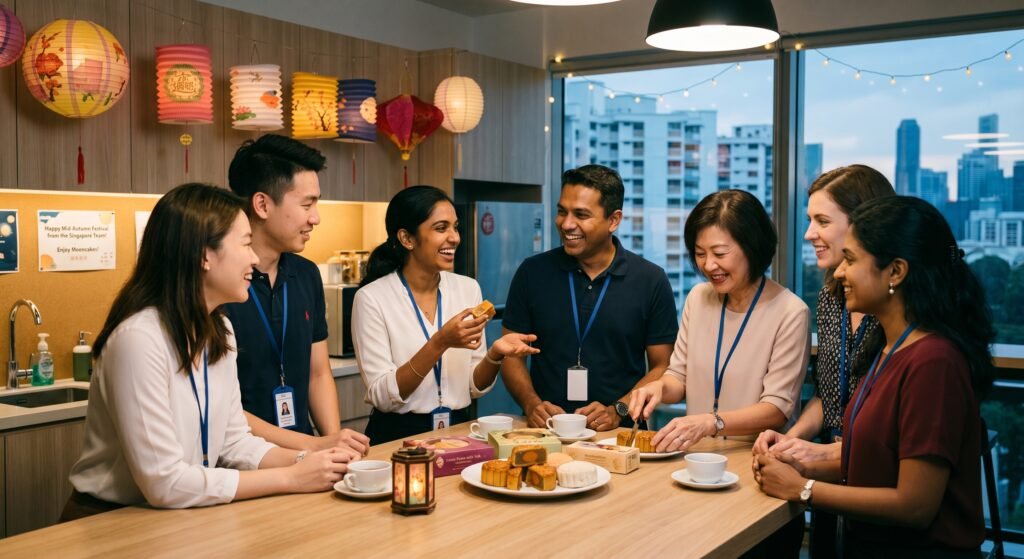
The Mid-Autumn Festival is built around a simple idea: that people who are separated should pause, look at the same moon, and feel connected despite the distance. Families gather. Lanterns are carried. Mooncakes are shared — carefully, in portions, because the point is never to consume alone.
In Singapore’s multicultural workplaces, the festival offers something beyond its cultural and religious significance: an annual reminder that the things that sustain us — togetherness, shared ritual, deliberate pause — are not soft extras. They are essential.
What Shared Ritual Does
Anthropologist Victor Turner’s research on communal ritual found that shared ceremonies — regardless of their specific cultural content — produce a state he called ‘communitas’: a temporary dissolution of hierarchical and social distinctions that generates feelings of equality, belonging, and mutual recognition.
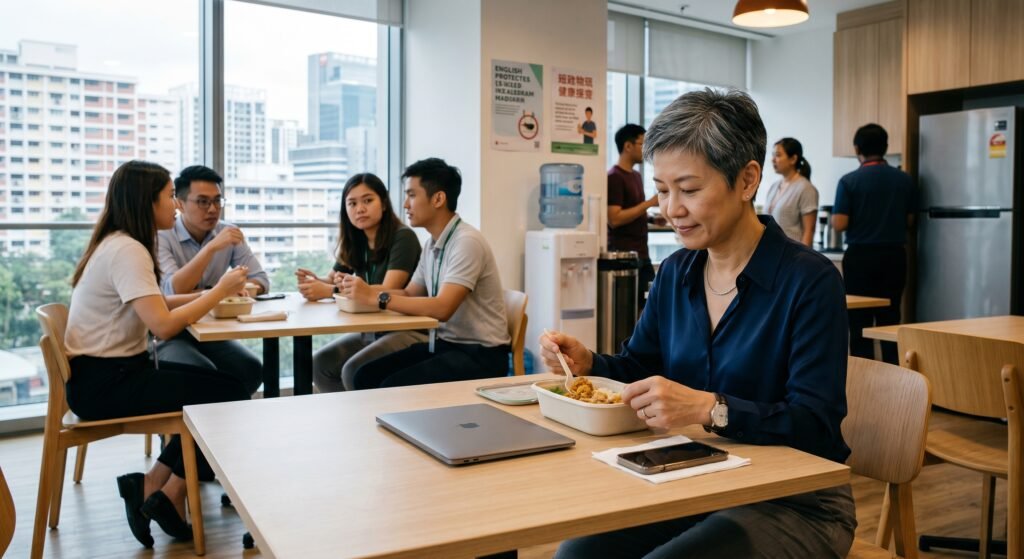
In workplace terms: the mooncake shared in the office pantry does something that the performance review cannot. It places people briefly in a different relationship with each other — not as employer and employee, or senior and junior, but as humans sharing something that goes beyond the transactional.
Cultural Celebration as Well-Being Strategy
Singapore’s diverse cultural calendar — Chinese New Year, Hari Raya, Deepavali, Christmas, National Day, Mid-Autumn — provides organisations with regular, natural opportunities to build the kind of community that sustains wellbeing and engagement.
These opportunities are routinely underinvested in. The mooncake box that arrives and sits on a desk without ceremony. The decoration that is put up on the last day. The ‘celebration’ that is announced rather than experienced. The difference between cultural observance that builds community and cultural observance that is a box to tick is investment: in time, in genuine participation, in the human details that make something feel real.
Reconnecting in a Fragmented World
Post-pandemic, many Singapore professionals have found that their social fabric at work is thinner than it used to be. Hybrid working, which offers real benefits, has also quietly eroded the informal connective tissue that proximity creates. The brief, warm interactions that build weak ties — the conversations in the lift, the unplanned lunch, the spontaneous gathering — are harder to sustain when people are not consistently in the same physical space.
The Mid-Autumn Festival, like every cultural celebration, is an invitation to rebuild that fabric deliberately. To pause the productive work long enough to share something. To look at the people around us — really look — and remember that we are not just colleagues in a project. We are human beings in a shared life.