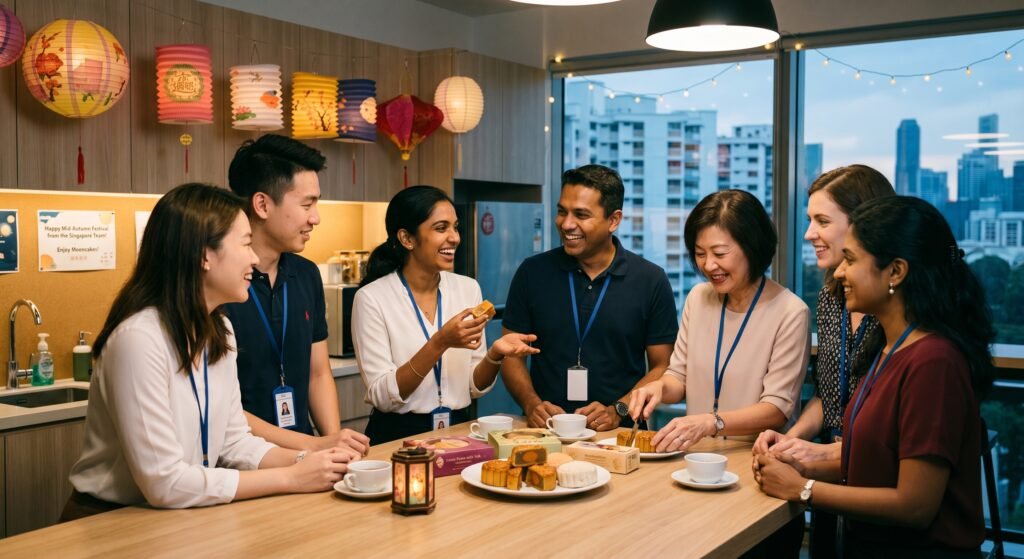

Every August 9, Singapore marks something genuinely remarkable: the building of a cohesive, prosperous society from extraordinarily diverse ingredients, in extraordinarily challenging circumstances. The founding generation of Singapore understood something that remains as true in workplaces as it is in nations — that belonging, shared purpose, and mutual care are not soft values. They are the infrastructure on which everything else is built.
Belonging Is Not Automatic
Singapore did not become cohesive by accident. It became cohesive through deliberate investment in the conditions that allow people of different backgrounds, languages, and beliefs to share a common life. Housing policy, education, national service, community infrastructure — all of it oriented toward the question: how do we build something together?
Workplaces face the same question and often invest far less deliberately in the answer. The assumption that a shared salary slip creates a shared community underestimates how much belonging requires. People do not feel they belong simply because they work in the same building. They feel they belong when they are known, when their contributions are seen, when they feel safe to be honest, and when they know that the people around them genuinely care about their wellbeing.
What National Day Reminds Us About Workplace Culture
National Day is an annual renewal of a shared narrative — a moment to step back from daily operations and reconnect with why the larger project matters. Organisations that create equivalent moments — town halls with genuine substance, team rituals that go beyond cake and announcements, explicit recognition of shared purpose and mutual contribution — tend to build the kind of cohesion that makes them more resilient when things are hard.
The organisations that struggle most are those where the shared narrative has become hollow: where the values on the wall bear no relationship to how decisions are made, where community-building is a budget line rather than a lived commitment, where people feel like interchangeable parts rather than irreplaceable individuals.
Well-Being as a National Priority — and an Organisational One
Singapore’s national well-being agenda has matured significantly in recent years. The government’s investments in mental health services, the National Mental Health and Well-Being Strategy, and the growing conversation about sustainable productivity all signal a recognition that a person’s wellbeing is not separate from their capacity to contribute — it is the foundation of it.
Organisations that are waiting for the culture to change before they invest in well-being have the causality backwards. The culture changes because of the investment. This National Day, the most fitting reflection an organisation can make is not about past achievement, but about present commitment: what are we actually building, and is it somewhere people can genuinely flourish?