Well-Being Champions Network

Training is the starting point.

What comes next is what makes it stick.

Most organisations invest in well-being training and then wonder why nothing changes.

The answer is not the training. It is what happens after.

Research on skill retention is consistent: without structured reinforcement, capability decays. Confidence fades. Boundaries blur. The colleague who left the training room ready to respond hesitates six months later because the moment feels different from the scenario.

This is not a failure of learning. It is a failure of infrastructure.

The Well-being Champions Network (WCN) is built around a different model. Training is the foundation. Everything else is designed to protect it. Learn more below.

The Post-Course Reality: Why Training Alone Is Not Enough
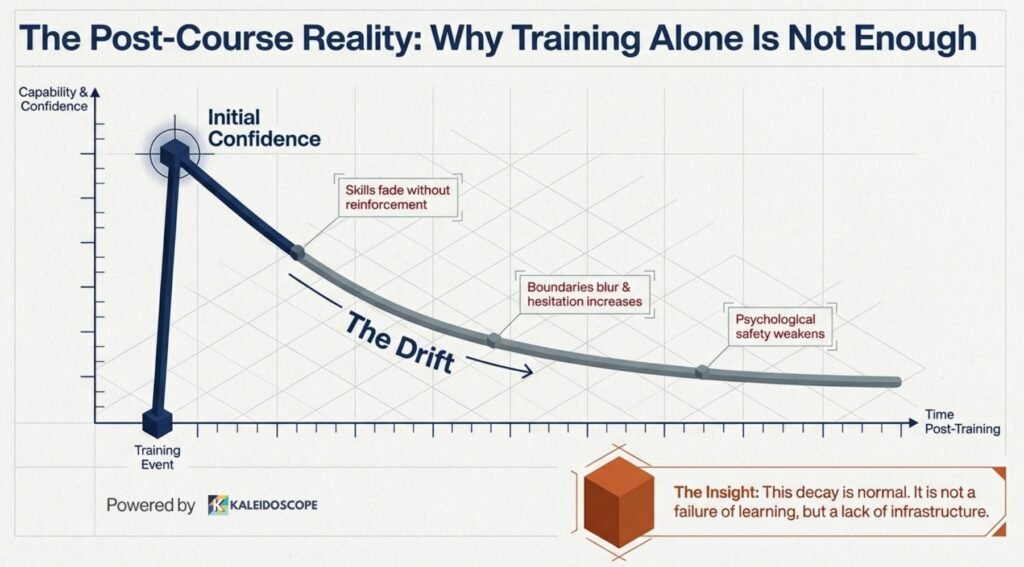
After a training event, confidence peaks. Then reality sets in. Without structured reinforcement, skills fade, boundaries blur, and hesitation increases. This is not a failure of the training or the person. It is a predictable consequence of sending someone back into their workplace without the infrastructure to keep what they learned alive.

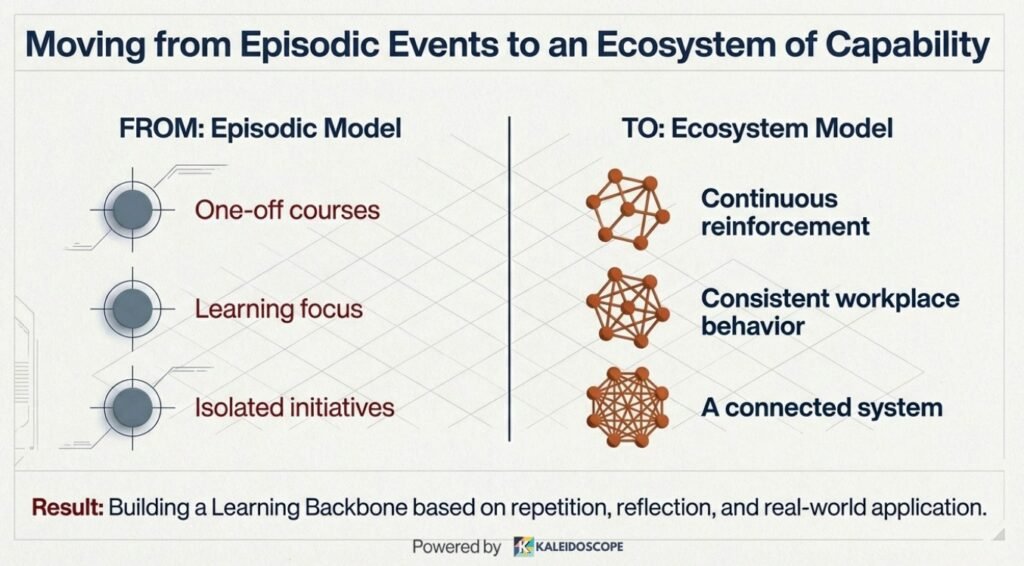
A single training course produces a spike in confidence. Without what comes after, that spike decays. The WCN replaces the episodic model with a connected ecosystem built on continuous reinforcement, consistent workplace behaviour, and a system where every touchpoint leads to the next.

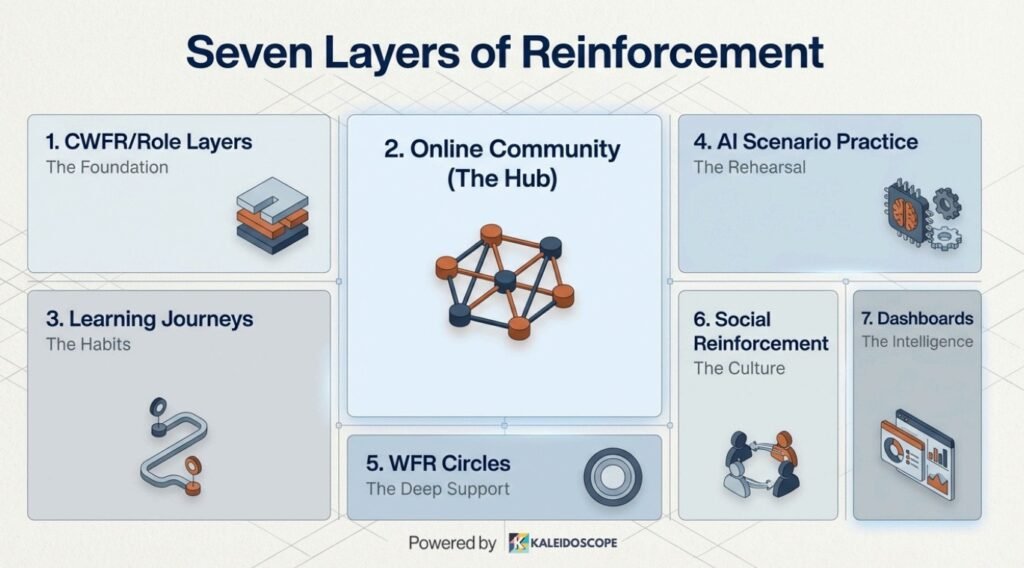
The WCN’s post-programme model is not a single follow-up session. It is seven interconnected layers, each serving a distinct function: role-based capability pathways, an online community hub, learning journeys, AI scenario practice, WFR Circles, social reinforcement, and dashboards. Together they form a learning backbone built on repetition, reflection, and real-world application.

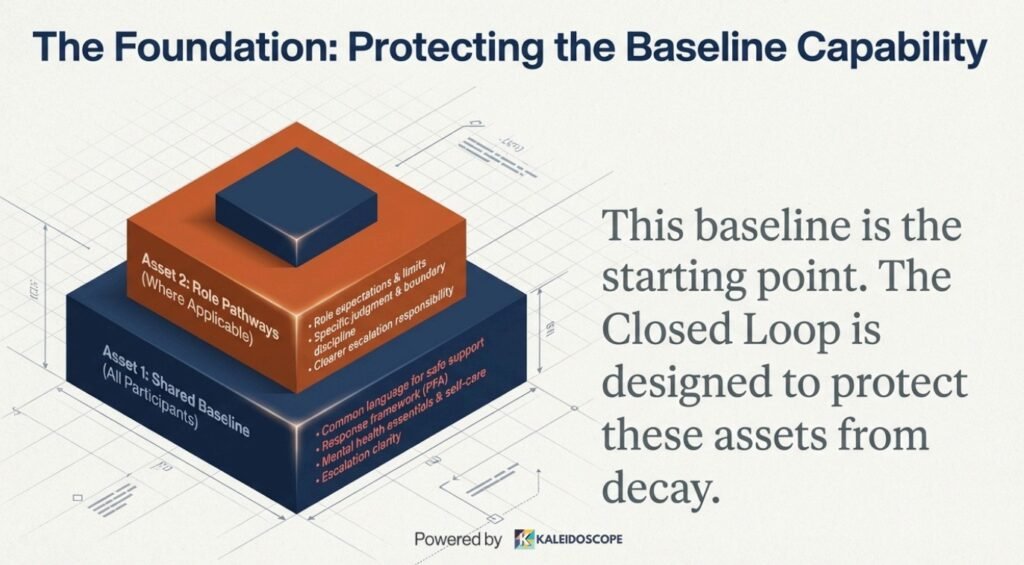
Before skills can be reinforced, they have to be established correctly. The shared baseline gives every participant, regardless of role, a common language, a response framework, mental health essentials, and escalation clarity. The role pathways build on top of this foundation. The entire post-programme system is designed to protect it from decay.

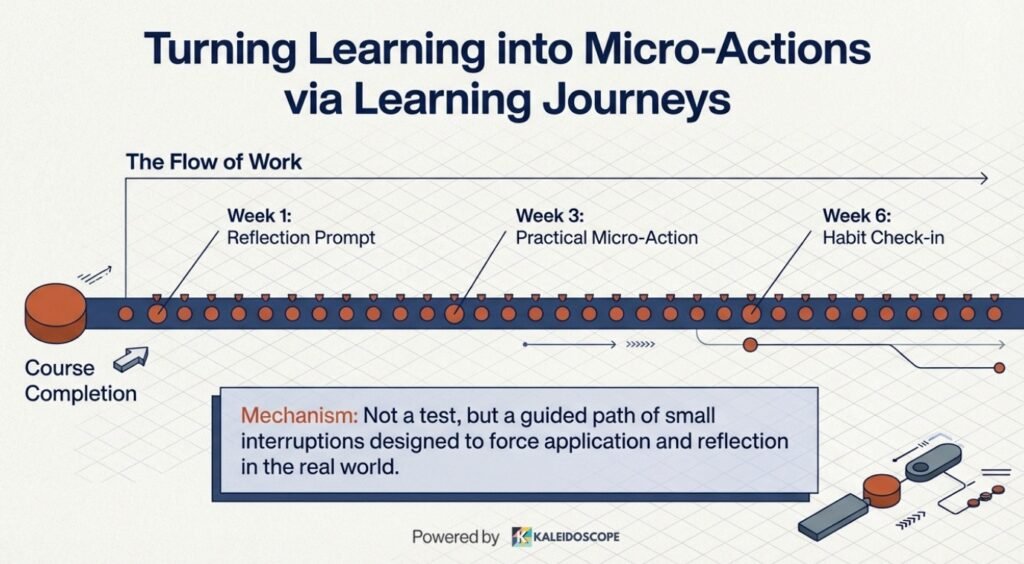
The most common reason skills do not transfer is that there is no structured prompt to apply them. Learning Journeys address this directly. At week one, participants receive a reflection prompt. At week three, a practical micro-action. At week six, a habit check-in. Each touchpoint is a small interruption designed to force application and reflection in the flow of real work, not in a training room.

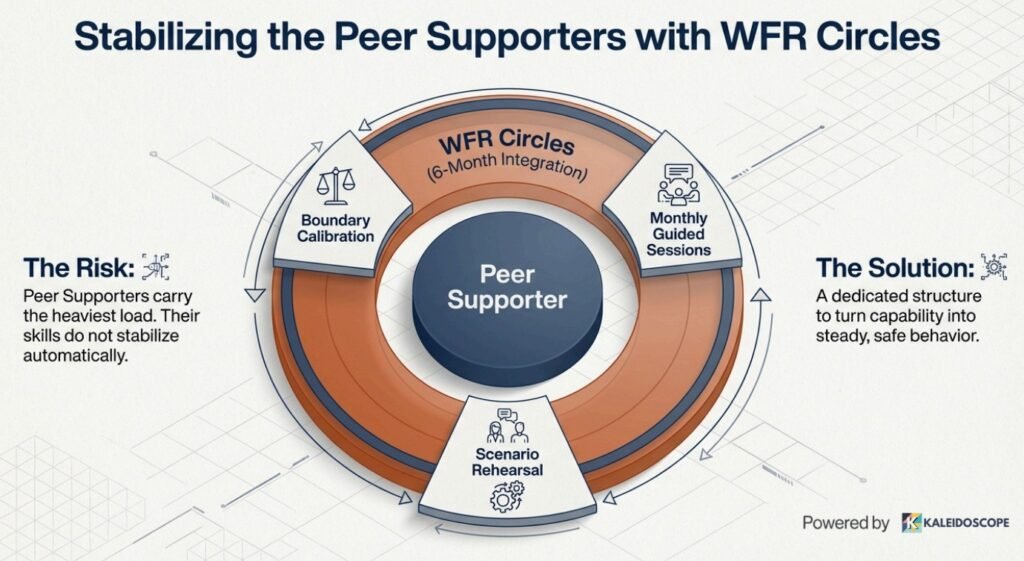
Peer Supporters carry the heaviest load. They are the first point of contact, operating without positional authority, often without a colleague who understands what the role actually demands. WFR Circles provide the dedicated structure that turns their training into steady, safe behaviour: monthly guided sessions covering boundary calibration, scenario rehearsal, and collective reflection over a six-month integration period.

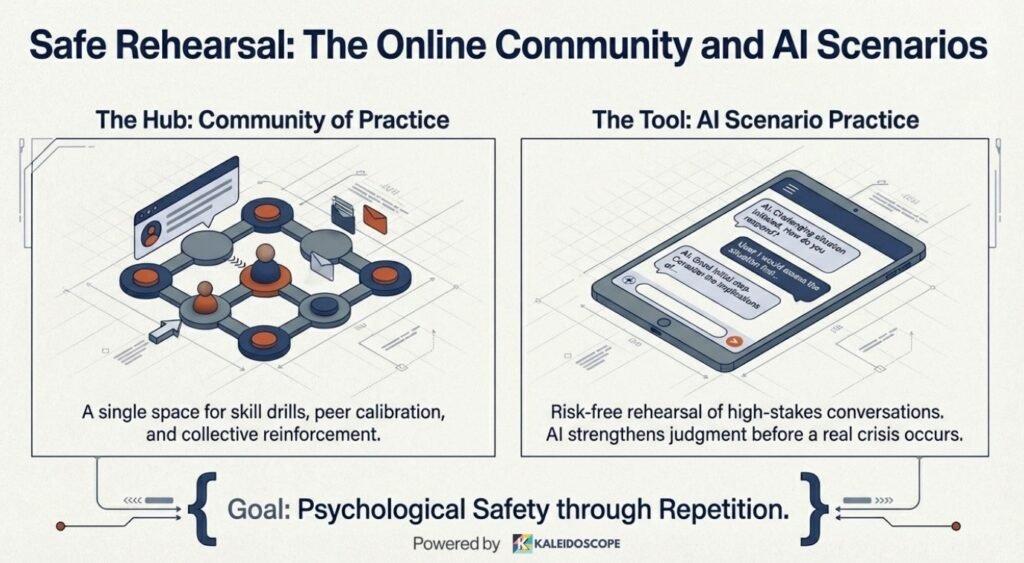
Practice before pressure is what builds judgment. The WCN’s Community of Practice provides a single space for skill drills, peer calibration, and collective reinforcement across organisations. AI Scenario Practice adds a risk-free rehearsal layer, giving participants the opportunity to work through high-stakes conversations before a real situation demands it. The goal is psychological safety through repetition.