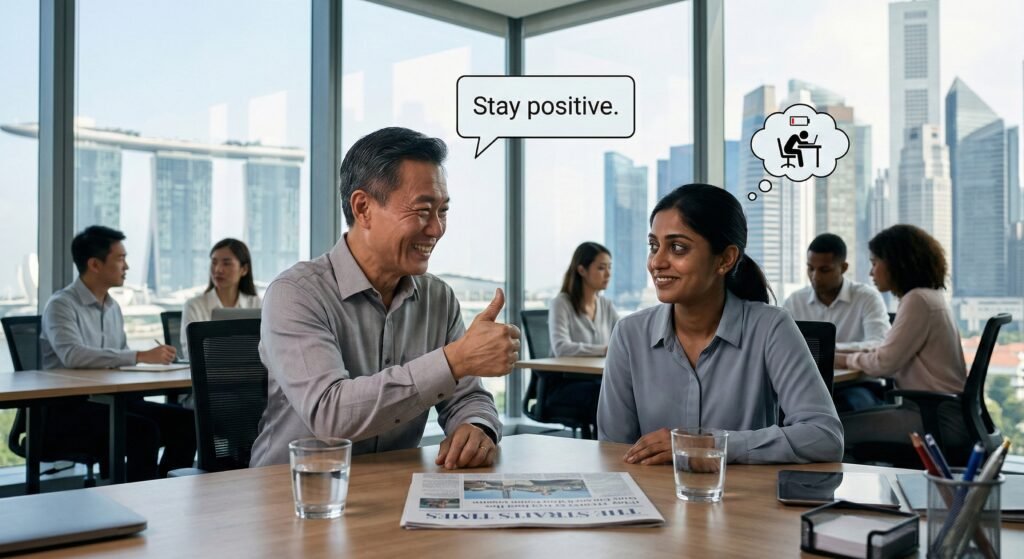

Economic shifts, digital transformation, and AI integration are reshaping industries across Singapore. Even when layoffs are not imminent, many employees experience rising anxiety about relevance, skill gaps, and long-term career stability.
Uncertainty is not just strategic — it is psychological.
Why Uncertainty Intensifies Stress
Ambiguity activates threat responses in the brain. When employees lack clarity about:
- Organisational direction
- Role evolution
- Skill requirements
- Future opportunities
Stress increases, even in otherwise stable environments.
Silence or vague communication can amplify fear more than difficult truths delivered transparently.
The Emotional Impact on Employees
Prolonged uncertainty can lead to:
- Reduced motivation
- Hypervigilance
- Rumination and overthinking
- Decreased engagement
- Lower trust in leadership
Employees may withdraw, focus narrowly on self-preservation, or begin job searching pre-emptively.
Organisational Responsibility During Change
Research consistently shows that transparent, timely communication significantly reduces workplace anxiety during change.
Organisations can:
- Communicate updates regularly, even when information is incomplete
- Offer upskilling and reskilling pathways
- Create open forums for questions
- Equip managers to have change-related conversations confidently
- Reinforce psychological safety during restructuring
Providing learning opportunities signals investment in employees’ futures, which stabilises morale.
Building Resilience During Uncertainty
Resilience during change is strengthened when employees feel:
- Informed
- Valued
- Heard
- Prepared
Well-being literacy, peer support communities, and early-intervention skills contribute to emotional stability during transition periods.
Conclusion
Uncertainty cannot be eliminated in modern workplaces — but fear can be reduced through transparency, empathy, and proactive support. Organisations that lead change with clarity and compassion strengthen resilience, loyalty, and long-term trust.
In times of disruption, psychological safety becomes a strategic advantage.