
In today’s fast-paced work environment, resilience and mental toughness are no longer optional skills—they are essential for sustaining productivity and well-being. A recent 2024 IMH survey revealed that 58% of Singapore employees report feeling overwhelmed by work-related stress at least once a week, highlighting the urgent need for resilience-building interventions.
Understanding Resilience and Mental Toughness
Resilience refers to the ability to recover from setbacks, adapt to change, and maintain well-being under pressure. Mental toughness involves staying focused and confident despite adversity, while maintaining emotional control. Together, they help employees navigate challenges without long-term declines in mental health.
Why Singapore Workers Struggle
Factors contributing to stress and burnout include:
- High workload expectations: 66% of employees report heavy workloads (Wellness at Work Report, 2024).
- Performance pressure: Career progression and societal expectations contribute to constant pressure.
- Rapid changes in work environments: Hybrid work, digital transformation, and economic uncertainties increase stress.
Without deliberate interventions, chronic stress can lead to burnout, disengagement, and mental health issues.
How Organisations Can Support Resilience
Employers can proactively strengthen resilience through several strategies:
- Skills-Based Training: Programs like Well-Being First Responder (WFR) equip employees with techniques for stress management, problem-solving under pressure, and supporting peers during challenging times.
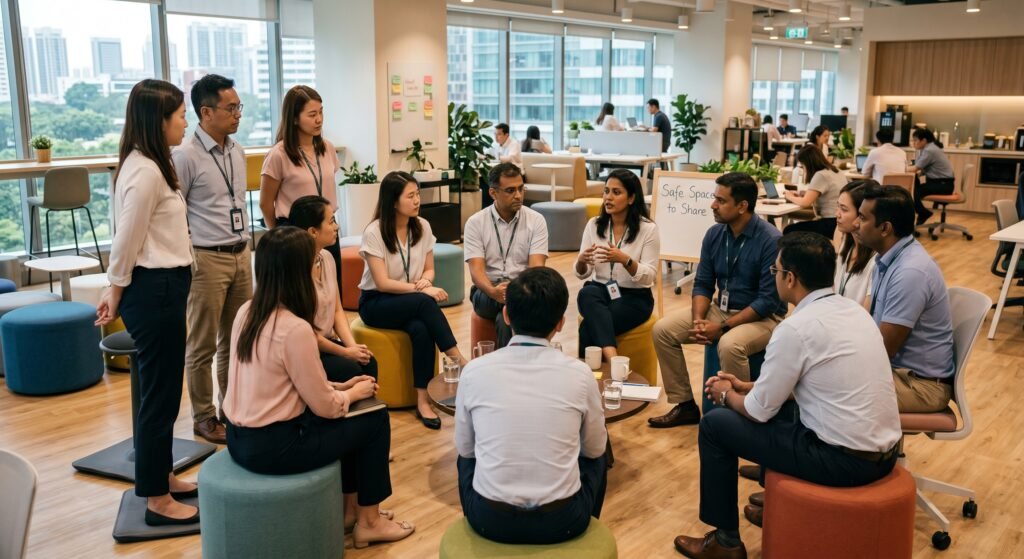
- Peer Networks: Embedding peer support within the Well-Being Champions Network (WCN) allows employees to share strategies, normalize challenges, and build collective resilience.
- Workload Design and Flexibility: Offering flexible hours, clear role expectations, and workload balancing reduces unnecessary stress, allowing employees to apply resilience skills effectively.
- Mental Health Check-Ins: Regular well-being check-ins reinforce the importance of self-care and help detect early signs of stress or burnout.
Conclusion
Resilience and mental toughness are key to thriving in Singapore’s demanding workplaces. By combining structured training through WFR, peer support via WCN, and thoughtful organisational design, companies can cultivate a workforce capable of managing stress, adapting to change, and sustaining long-term well-being. Investing in resilience is not just about mental health—it directly contributes to engagement, retention, and organisational performance.