
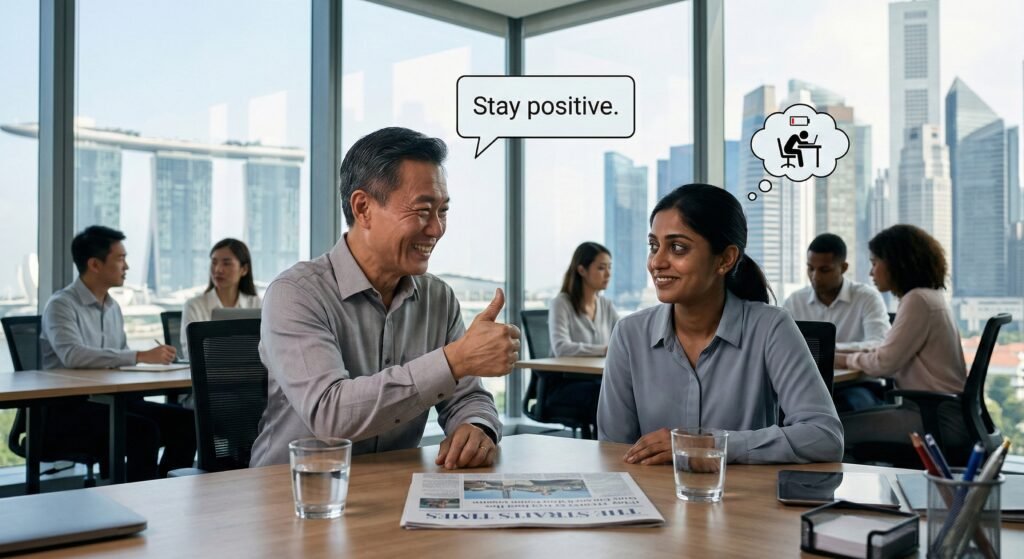
Resilience and optimism are valuable qualities. However, when positivity becomes mandatory, it can silence genuine struggles.
In Singapore’s achievement-driven culture, phrases like “just push through,” “stay strong,” or “look on the bright side” are common. While well-intentioned, they can unintentionally dismiss legitimate stress and emotional fatigue.
What Is Toxic Positivity?
Toxic positivity occurs when:
- Negative emotions are invalidated
- Employees feel pressure to appear upbeat
- Difficult conversations are avoided
- Burnout is reframed purely as mindset weakness
In such environments, vulnerability may be seen as incompetence rather than honesty.
Employees learn to mask distress, smile through exhaustion, and suppress concerns — leading to internal strain.
The Emotional and Cultural Impact
When emotions are consistently minimised:
- Stress accumulates internally
- Psychological safety decreases
- Trust in leadership erodes
- Employees disengage silently
Over time, this creates emotional dissonance — employees present one version of themselves outwardly while struggling internally.
Research in organisational psychology shows that authentic emotional expression — within respectful boundaries — strengthens trust and collaboration, whereas emotional suppression increases burnout risk.
How Leaders Contribute (Unintentionally)
Leaders often promote positivity to inspire teams. However, when leaders model overwork, dismiss fatigue, or reward relentless endurance, they may reinforce harmful norms.
The intention may be to maintain morale — but without space for honest dialogue, morale becomes performative rather than genuine.
Creating Healthy Optimism
Healthy workplace cultures balance hope with realism.
Organisations can:
- Normalise acknowledging challenges openly
- Train managers in empathetic listening skills
- Encourage constructive feedback rather than forced agreement
- Recognise effort and progress — not just outcomes
Training in supportive conversations equips leaders to respond without minimising concerns.
Conclusion
True resilience is not about denying difficulty — it is about confronting challenges honestly and responding constructively. Workplaces that allow real conversations build stronger, more sustainable teams.
Optimism becomes powerful only when it is authentic.