Burnout is not uncommon in today’s workplace — but in Singapore, it has reached concerning levels. According to the 2024 Wellness at Work Report, 61% of employees report experiencing burnout symptoms — a slight reduction from 62% in 2022 but still alarmingly high. (HC Magazine, 2024)
Younger Workers Are Hardest Hit
The report highlights generational differences: Gen Z workers (68%) and Millennials (65%) report the highest prevalence of burnout, compared with older groups. Younger employees often face pressures to establish careers while balancing financial, social, and personal expectations, compounding stress and fatigue.
Stress and Workload Are Key Drivers
Workplace stress compounds burnout. Surveys show that:
- 66% of employees report heavy or extremely heavy workloads — one of the top contributors to workplace stress.
- Other top stress sources include tight deadlines, lack of managerial support, and unclear role expectations, contributing to emotional and physical fatigue.
- Remote work appears to offer some relief: employees working fully remotely report higher satisfaction with their mental health (71%) compared with the overall average (56%). (Business News Asia, 2024)
Current Organisational Responses
Many organisations in Singapore are recognising burnout as a critical issue and are introducing a variety of interventions, including:
- Wellness Programs: Employers offer Employee Assistance Programs (EAPs), mindfulness and meditation sessions, and physical health initiatives such as gym memberships or on-site fitness activities.
- Flexible Work Arrangements: Many companies allow hybrid work, staggered hours, and increased leave options to help employees balance work and personal life.
- Manager Training: Leadership development programs now increasingly include modules on mental health awareness, coaching, and supporting teams under stress.
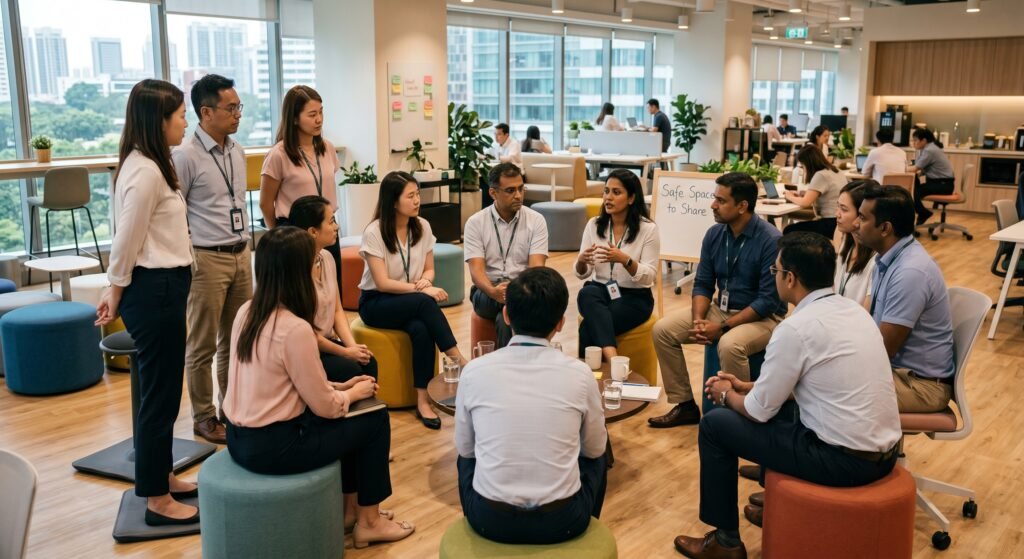
- Peer Support Networks: Some organisations are developing peer mentoring or Wellness First Responder programs to provide informal support channels and early intervention.
- Monitoring Workload: HR departments are beginning to review workloads, task allocation, and performance expectations to prevent chronic overwork.
While these measures are encouraging, uptake and engagement vary widely. Many employees report low awareness of available resources, inconsistent application across departments, or perceptions that using these supports could signal weakness.
The Disconnect Between Support and Need
Despite organisational efforts, many employees feel under-supported:
- Only 45% of employees say they have access to confidential counselling services.
- 56% feel that their mental health is not well supported by their employer, the highest rate in Southeast Asia.
- Cultural barriers persist: employees often hesitate to seek help due to fear of stigma, career repercussions, or a perception that mental health initiatives are tokenistic.
- Mental health benefits are often undervalued when employees consider new job opportunities, suggesting awareness and organisational culture remain significant hurdles.
Opportunities for Further Development
To tackle burnout effectively, Singapore workplaces could expand their strategies beyond standard programs:
- Embed Mental Health Into Organisational Culture
Mental health should not be treated as a separate initiative but integrated into daily workflows, performance conversations, and leadership practices. Leaders who model healthy behaviours — taking breaks, setting boundaries, and encouraging support-seeking — can reduce stigma and increase adoption. - Data-Informed Interventions
Organisations can use anonymised employee surveys and feedback to identify high-stress teams or tasks and adjust workload or resources accordingly. Real-time tracking of burnout indicators allows proactive support rather than reactive responses. - Comprehensive Wellness First Responder Programs
Training employees as Wellness First Responders (WFR) empowers peers to provide early support, recognise signs of stress or burnout, and guide colleagues to appropriate resources. WFR programs have shown to strengthen organisational resilience and improve psychological safety. - Tailored and Inclusive Support
Mental health support should be flexible and culturally relevant. This may include multilingual resources, gender-sensitive programs, and specific initiatives for frontline workers or neurodivergent employees who face unique challenges. - Leadership Accountability and Recognition
Embedding mental health goals into leadership KPIs and rewarding managers who actively reduce team stress can create systemic change.
Conclusion
Burnout in Singapore is both prevalent and complex, tied to workload, stress, and organisational culture. While organisations are implementing programs and policies to address mental health, gaps remain in uptake, accessibility, and effectiveness. To make meaningful impact, companies must move beyond awareness campaigns, embed mental well-being into culture, and adopt proactive, data-driven, and inclusive strategies. By doing so, organisations can not only reduce burnout but also improve engagement, productivity, and employee retention, creating a workplace where well-being and performance go hand in hand.