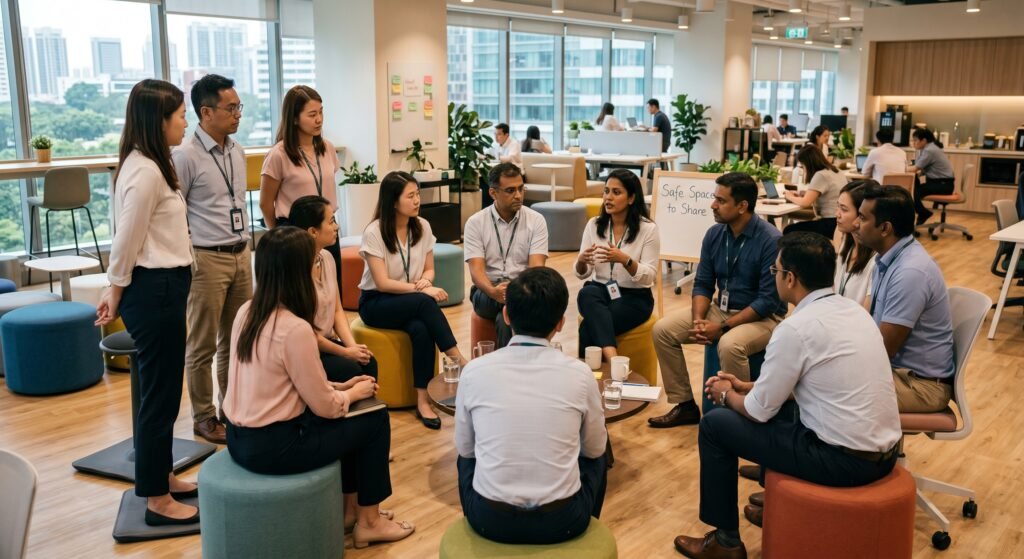

Self-care is often framed as something employees should do in their personal time: take breaks, exercise, rest after work. While these habits are important, this framing can mistakenly place the onus entirely on the individual, overlooking workplace structures that contribute to stress in the first place.
In Singapore, workplace mental health support is often perceived as lacking. According to a recent study, 56% of Singapore employees believe their current employer does not support mental well-being effectively, the highest among countries surveyed in Southeast Asia.
Why Self-Care Alone Isn’t Enough
Even when individuals try to practise self-care, workplace conditions may counteract those efforts. For example:
- Heavy workloads remain a top stressor, with 66% of employees reporting this as a source of strain.
- Nearly half of employees experience occasional burnout symptoms.
- Many workplaces lack visible support, leading to underutilisation of available resources.
These structural influences show that self-care cannot thrive in isolation; it requires an environment that permits people to use it.
Organisational Support Makes Self-Care Work
Organisations can support self-care through:
- Clear, manageable workload expectations
- Respect for boundaries around after-hours work
- Encouragement of breaks and leave usage
- Leadership modelling healthy behaviour
These actions communicate that self-care is a shared priority, not just an individual checklist.
Why This Matters
When employees feel supported in self-care, they are more likely to:
- Maintain sustained performance
- Experience less emotional exhaustion
- Bring their best to their roles
This aligns with Employee Assistance Program engagement trends: while uptake remains moderate, those who do participate often report improved stress management.
Conclusion
Self-care cannot succeed in a vacuum. It must be supported by workplace culture, policies, and leadership signals that make self-care possible — not just encouraged. When this alignment happens, well-being becomes built into daily work life, not treated as an add-on.