
Resilience is often described as the ability to bounce back from stress and adversity. In workplace settings, it is commonly associated with training programmes or personal development initiatives. However, many employees already feel stretched, leaving them wondering where resilience is supposed to fit into their daily lives.
The reality is that resilience does not have to be built through additional tasks. Often, it is strengthened through small, everyday practices embedded into how work is done.
Rethinking Resilience at Work
Resilience is not about pushing through exhaustion or enduring unhealthy conditions. Sustainable resilience involves having the capacity to recover, adapt, and seek support when needed.
In Singapore, surveys have shown that many employees experience prolonged stress but delay seeking help. Building everyday resilience means reducing barriers to rest, recovery, and connection during the workday.
Small Practices That Make a Difference
Resilience at work can be supported through simple, low-effort practices such as:
- Regular check-ins that focus on capacity, not just progress
- Encouraging short pauses between demanding tasks
- Clear prioritisation to reduce constant urgency
- Normalising conversations about workload and stress
These practices help prevent stress from accumulating unnoticed.
The Role of Social Support
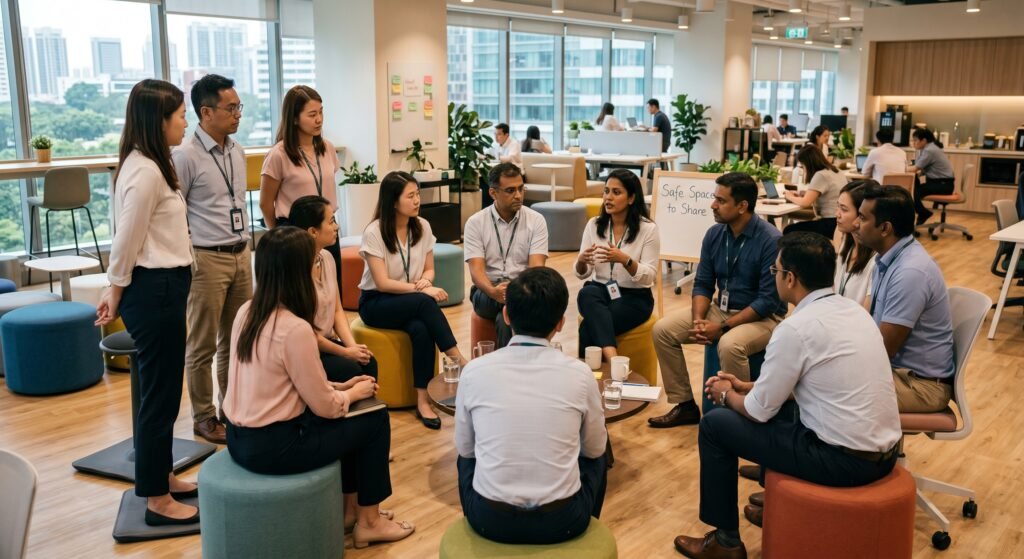
One of the strongest protective factors against stress is social connection. Feeling supported by colleagues and supervisors can significantly buffer the effects of pressure.
Workplaces that invest in peer support capability — including skills from Psychological First Aid — create environments where employees are more comfortable reaching out early, rather than waiting until they are overwhelmed.
Embedding Resilience into Work Culture
Resilience is most effective when it is part of how work is structured, not an add-on. When organisations model healthy boundaries, encourage reflection, and support learning, resilience develops naturally over time.
Communities of Practice focused on well-being provide an additional layer of support, allowing employees to share practical strategies and learn from real experiences across organisations.
Making Resilience Sustainable
Building resilience does not require employees to do more. It requires workplaces to do things differently — creating conditions where people can adapt, recover, and continue contributing meaningfully.